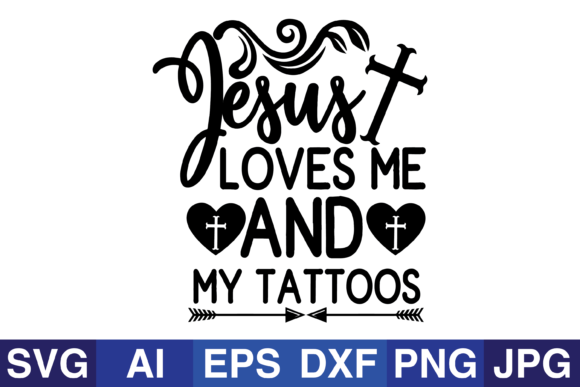
Jesus Loves Me and My Tattoos Graphics for Crafts
When evaluating a new graphic design asset for a client project, my first question is always about emotional resonance. Does this visual communicate the specific niche identity immediately? Upon reviewing Jesus Loves Me and My Tattoos, the answer is a definitive yes for a very specific intersection of faith and alternative self-expression. This is not your traditional church bulletin clipart; it carries a distinct mood that bridges modern design aesthetics with spiritual messaging. For a designer working on branding for a Christian tattoo artist, a faith-based apparel line, or an inclusive ministry outreach, this illustration serves as an immediate visual hook.
The asset strikes a balance between reverence and edge. In a recent concept exploration for a handmade business launching a new t-shirt design collection, this graphic provided the exact tone needed to signal inclusivity without sacrificing religious sincerity. It feels authentic rather than performative, which is critical when designing for audiences who value genuine expression over generic marketing visuals. As a creative design element, it successfully targets a demographic often overlooked in traditional religious merchandise, making it a high-value addition to any relevant design bundle.
Evaluating Technical Specs for Print-on-Demand and Sublimation
From a production standpoint, the technical specifications dictate whether a digital product can survive the transition from screen to physical substrate. When you acquire this asset, YOU WILL GET source file High-resolution JPEG JPG 300 dpi Svg cut files High-resolution Print Ready final PNG Transparent File size 4500×5400 pixel , Resolution 300dpi, Color Mode RGB • Included suppo. These specs are robust enough for most commercial design applications, but they require intelligent handling.
The 4500×5400 pixel dimension at 300dpi is the gold standard for sublimation design and direct-to-garment printing. This resolution ensures that intricate details in the illustration remain crisp even when scaled up for adult-sized apparel or large tote bags. However, designers must note the RGB color mode. While RGB offers a wider gamut for digital displays and some DTG printers, professional offset printing or certain screen printing setups may require a CMYK conversion. Always soft-proof the colors before sending this printable design to a commercial printer to avoid unexpected shifts in saturation.
The inclusion of SVG cut files is non-negotiable for Cricut project workflows and vinyl applications. Vector formats allow for infinite scaling without pixelation, which is essential when adapting the same artwork for a small sticker design and a large window decal. The transparent PNG is equally vital for layering within Canva template projects or complex Photoshop compositions where background removal would otherwise be tedious. Having both raster and vector options makes this a versatile graphic design asset for mixed-media campaigns.
Strategic Placement in Brand Identity and Merchandise
In real-world application, Jesus Loves Me and My Tattoos performs best as a hero graphic or a primary focal point. During a mockup phase for a boutique product line, I found that this illustration commands attention and should not be relegated to a secondary corner element. It works exceptionally well centered on chest panels of hoodies, across the back of denim jackets, or as the main visual on Etsy product listings. Its detailed nature supports brand identity by acting as a standalone statement piece that reduces the need for excessive typography.
For social media graphics and Pinterest pins, the vertical aspect ratio of the original file aligns perfectly with mobile-first viewing habits. This eliminates the need for awkward cropping that often destroys composition. When used in editorial design or blog visuals discussing faith and body art, the image provides necessary texture and breaks up text-heavy layouts effectively. It also serves as excellent packaging design filler; printed on tissue paper or included as a freebie sticker with orders, it reinforces the unboxing experience and encourages user-generated content sharing.
However, this asset requires careful placement. Due to its complexity and thematic weight, it struggles in crowded layouts or minimalist branding contexts. Placing it against busy photographic backgrounds can reduce legibility and impact. It is not suitable for corporate stationery or formal event invitations unless the brand voice is explicitly alternative. Designers must respect the visual hierarchy; let this illustration breathe. Pairing it with clean sans serif fonts or rugged handwritten typefaces maintains readability, whereas ornate script fonts often compete visually and create clutter.
Designer Workflow Notes: Testing and Commercial Viability
Before committing this asset to a final client deliverable, run through a rigorous quality assurance checklist. First, test the SVG in your cutting software. Complex illustrations sometimes contain open paths or overlapping nodes that cause cutter errors. A quick weld or flatten operation might be necessary for seamless vinyl weeding. Second, verify the PNG transparency edges. Zoom in to 100% to check for jagged pixels or ghosting artifacts that could look unprofessional on dark fabrics. If you plan to use this for white ink underbases in DTF printing, ensure the transparency channel is clean.
Contrast testing is mandatory. Preview the design in grayscale to ensure value separation holds up without color reliance. This is crucial for accessibility and for clients who may want monochrome variations. Test print a swatch at actual size on your intended material; what looks sharp on a retina display might bleed slightly on textured cardstock or polyester blends. Adjust stroke widths or detail levels in the vector file if the physical output loses fidelity.
Finally, confirm the commercial license terms explicitly. Just because a file is available on a creative marketplace does not guarantee unrestricted resale rights. Verify if the license covers end-products for sale versus digital redistribution. For small business branding and print-on-demand sellers, understanding these legal boundaries protects your client from future liability. When used correctly within licensing agreements, Jesus Loves Me and My Tattoos is more than just clipart; it is a strategic tool for connecting with a passionate, underserved audience through thoughtful, professional design execution.
Optimizing for Digital Marketplaces and Client Deliverables
For digital sellers creating derivative works, this asset offers significant potential when transformed responsibly. Consider using it as a base layer for composite designs rather than selling it as-is. Combine it with original typography, textures, or complementary elements to create unique marketing visuals that stand out in saturated search results. This approach adds value and respects the original creator's work while providing fresh options for consumers seeking specific aesthetic combinations.
When presenting concepts to clients, always show this graphic in context via realistic product mockups rather than flat digital previews. Clients often struggle to visualize how intricate illustrations translate to physical goods. Seeing Jesus Loves Me and My Tattoos draped naturally on fabric or displayed in a lifestyle setting bridges the gap between abstract approval and confident purchasing decisions. This practical presentation strategy demonstrates professional competence and helps justify premium pricing for custom design services built around quality assets.